
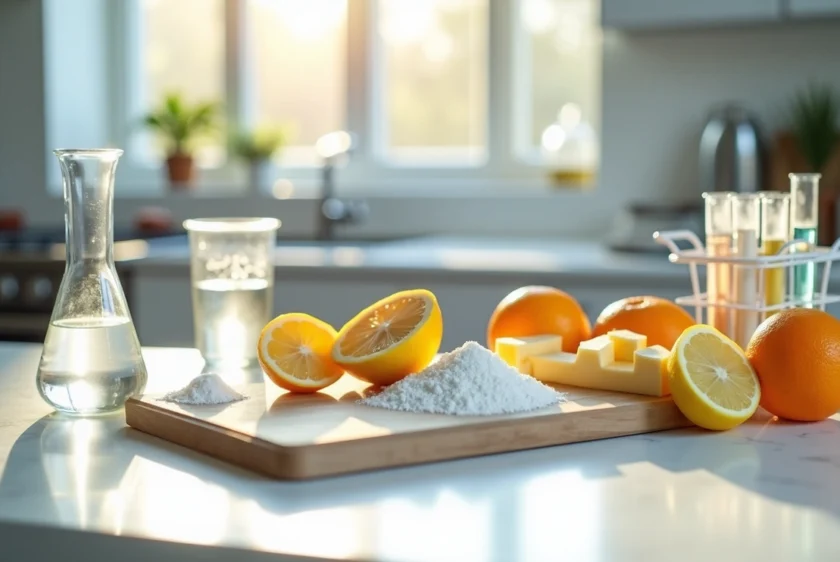

Sodium citrate appears on countless food labels, but what exactly is this substance and why is it so widely used in our food supply? The sodium citrate uses in food are remarkably diverse, ranging from preserving freshness to enhancing flavors in various products we consume daily.
Derived from citric acid, which occurs naturally in citrus fruits like lemons and oranges, sodium citrate is generally recognized as safe (GRAS) by the U.S. Food and Drug Administration (FDA). This food additive serves multiple functions in the food industry as a flavoring agent, buffer, emulsifier, and preservative. Additionally, sodium citrate has earned the European food additive designation E331, confirming its acceptance in global food standards.
What is sodium citrate, and is sodium citrate safe for regular consumption? As a sodium salt of citric acid with the formula Na₃C₆H₅O₇, it functions primarily as a buffer that controls acidity in gelatin desserts, jam, ice cream, candy, and various other foods. The Environmental Protection Agency’s review of industry-submitted data confirms that this substance poses a low risk for human health. Furthermore, European Union Ecolabel program data shows sodium citrate has low chronic toxicity to aquatic life, making it environmentally responsible as well.
Throughout this article, we’ll explore the science behind sodium citrate, examining its various applications in food production, addressing safety concerns, and uncovering its lesser-known uses beyond the kitchen. Whether you’re a concerned consumer or simply curious about food science, understanding sodium citrate will help you make more informed choices about the products you purchase and consume.
What is Sodium Citrate and Where Does It Come From?
Sodium citrate stands as one of the most versatile food additives in the modern food industry. This white crystalline compound serves as the sodium salt of citric acid, commonly referred to as trisodium citrate or citrosodine in technical contexts [1].
Chemical formula: C₆H₅Na₃O₇
The molecular structure of sodium citrate consists of one citrate molecule ionically bound with three sodium molecules [2]. In each gram of sodium citrate, approximately 0.27 grams is sodium while 0.73 grams is citrate [2]. This compound appears as white granular crystals or powder that’s slightly deliquescent (absorbs moisture) in humid air [3]. Though practically insoluble in alcohol, it dissolves readily in water [3]. Notably, it retains the characteristic sour taste of its parent compound, citric acid, combined with a salty flavor that makes it useful in food applications [4].
Natural sources: citrus fruits
While commercial sodium citrate is synthesized, its foundational component—citric acid—occurs abundantly in nature. Citrus fruits represent the richest natural sources of citric acid [5]. Lemons, limes, oranges, grapefruits, tangerines, and pomelos contain substantial amounts [5]. Other fruits like pineapples, strawberries, raspberries, cranberries, cherries, and even tomatoes contain citric acid in lesser quantities [5]. Interestingly, citric acid also emerges as a byproduct during cheese, wine, and sourdough bread production, though not in quantities sufficient for commercial extraction [5].
Industrial production using citric acid and sodium hydroxide
Industrial production of sodium citrate primarily involves neutralizing citric acid with sodium hydroxide or sodium carbonate [6]. The reaction follows this principle: C₆H₈O₇ + 3NaOH → C₆H₅O₇Na₃ + 3H₂O [7]. Essentially, manufacturers first dissolve sodium hydroxide in water before adding citric acid at a controlled rate [2]. The production process often begins with citric acid derived from the fermentation of molasses using the fungus Aspergillus niger [4]. Subsequently, the mixture undergoes cycles of heating, cooling, and evaporation to isolate sodium citrate crystals [2]. This manufacturing method yields a highly soluble and stable compound with a melting point of 300°C and a pH between 7.5 and 9.0 in aqueous solution [4].
How Sodium Citrate Works in Food Applications
In the realm of food science, the practical applications of sodium citrate showcase its remarkable versatility. This ingredient performs four distinct functions that make it indispensable in modern food production.
Buffering agent to stabilize pH in beverages
When added to carbonated beverages, sodium citrate serves as an effective pH regulator, maintaining stability and preventing drastic acidity fluctuations [8]. This buffering capacity proves especially valuable in soft drinks and sports drinks where consistent pH levels ensure product quality throughout shelf life [9]. Even when solutions aren’t extremely acidic, sodium citrate stabilizes pH in canning and pickling processes, consequently inhibiting microbial growth that leads to spoilage [10].
Emulsifier in cheese to prevent fat separation
Perhaps the most visible application of sodium citrate occurs in cheese products. The compound creates stable oil-in-water emulsions [11], preventing the separation of ingredients that would otherwise not mix well [6]. In processed cheese, sodium citrate disrupts the calcium-protein bonds, accordingly allowing the proteins to interact with both fat and water [12]. This chemical interaction explains why cheese sauces made with sodium citrate maintain their smooth, creamy texture without becoming greasy or oily when melted [13].
Preservative to prevent oxidation and spoilage
As a preservative, sodium citrate extends product shelf life through multiple mechanisms. It inhibits bacterial and mold growth in dressings, sauces, and processed foods [6]. Moreover, it acts as a chelating agent, sequestering metal ions that would otherwise accelerate oxidation [10]. This antioxidant function proves particularly valuable in dairy products and processed meats [14].
Flavor enhancer in processed foods
Beyond its functional properties, sodium citrate contributes significantly to flavor profiles. It provides a distinctive tangy taste that complements many food products [8]. Simultaneously, it balances overly sweet or acidic flavors, making it particularly useful in beverages and sauces [9]. This dual capacity to enhance and harmonize flavors makes it a prized ingredient in food formulation.
Health and Safety Insights: Is Sodium Citrate Safe?
The widespread use of sodium citrate in food products naturally raises questions about its safety profile. Let’s examine what scientific evidence tells us about this common food additive.
GRAS status by FDA and EFSA
The United States Food and Drug Administration (FDA) recognizes sodium citrate as Generally Recognized as Safe (GRAS) under 21 CFR §184.1751 [15]. Indeed, it’s listed as an indirect food additive, a prior-sanctioned ingredient, and can be used in food with no limitation other than current good manufacturing practice [16]. Similarly, European regulatory authorities have established sodium citrate’s safety for food applications.
Low toxicity and allergen profile
Sodium citrate demonstrates low acute toxicity across multiple studies. The Cosmetic Ingredient Review Expert Panel concluded sodium citrate is safe for use in concentrations up to 10% in both rinse-off and leave-on products [15]. Despite its widespread use, allergic reactions remain uncommon [17]. If sensitivities occur, they typically manifest as mild skin irritation rather than severe allergic responses.
Sodium intake considerations for hypertensive individuals
Nevertheless, individuals with hypertension or cardiovascular conditions should exercise caution. Pharmaceutical formulations containing sodium citrate can significantly contribute to daily sodium intake [18]. For this reason, those on sodium-restricted diets or with kidney dysfunction should consult healthcare providers about sodium citrate consumption [19].
Biodegradability and environmental impact
From an environmental perspective, sodium citrate exhibits favorable characteristics. It’s readily biodegradable and shows low toxicity to aquatic organisms [5]. As opposed to persistent chemicals, sodium citrate dissociates in aqueous solutions to sodium and citrate ions, which naturally break down [5]. In fact, the EPA lists sodium citrate on its Safer Chemical Ingredient list as a material of low concern [20].
Beyond Food: Medical and Athletic Uses of Sodium Citrate
Beyond its common food applications, sodium citrate plays crucial roles in healthcare and athletics. This versatile compound extends far beyond kitchen uses into specialized medical and performance-enhancing contexts.
Anticoagulant in blood transfusions
Since 1914, blood banking has relied on sodium citrate as an anticoagulant in stored blood [21]. By chelating calcium, sodium citrate prevents coagulation during storage and transfusion [22]. However, rapid transfusion exceeding one unit every five minutes can lead to citrate toxicity, causing hypocalcemia with potential cardiac and neurologic complications [21].
Treatment for kidney stones and gout
Sodium citrate effectively prevents kidney stones by forming complexes with urinary calcium and inhibiting crystal formation [23]. Studies show citrate therapy reduced new stone growth by 74% compared to control groups [23]. Additionally, it treats metabolic acidosis by increasing urinary pH, helping manage conditions like gout by enhancing uric acid excretion [24].
Lactic acid buffering for athletic performance
Unlike sodium bicarbonate, sodium citrate provides ergogenic benefits without severe gastrointestinal distress [4]. After ingestion, it converts to bicarbonate ions, increasing blood pH and enhancing hydrogen ion clearance during exercise [4]. One study demonstrated significantly improved performance in fitness challenges with sodium citrate supplementation (0.5g/kg body weight) [25].
Hydration support in endurance sports
Among athletes, sodium citrate helps maintain electrolyte balance, supporting blood volume and circulation [26]. Its mildly tart flavor makes it ideal for hydration formulas, as it increases sodium intake without an overly salty taste [27]. Proper sodium replacement during endurance events helps prevent cramping and hyponatremia [27].
Conclusion
Sodium citrate stands as a remarkable multifunctional compound that extends far beyond its role as a common food additive. Throughout this article, we’ve explored how this crystalline substance serves as an essential buffering agent, emulsifier, preservative, and flavor enhancer in countless food products we consume daily. The science behind sodium citrate reveals a compound that effectively stabilizes pH levels in beverages, creates creamy textures in cheese products, prevents spoilage, and balances flavors across various food applications.
Safety data clearly demonstrates sodium citrate’s low toxicity profile and minimal environmental impact. Consequently, both the FDA and European regulatory bodies have deemed it safe for regular consumption. However, individuals with hypertension or kidney conditions should certainly remain mindful of their sodium intake when consuming products containing this additive.
Perhaps most surprisingly, sodium citrate’s utility extends well beyond our kitchen shelves. This versatile compound plays significant roles in medical settings as an anticoagulant and kidney stone treatment. Additionally, athletes benefit from its lactic acid buffering properties and hydration support during endurance activities.
The next time you spot sodium citrate on a food label, you’ll undoubtedly have a deeper understanding of its purpose and function. This unassuming compound represents the perfect example of how food science works quietly behind the scenes to improve product quality, safety, and taste. Though often overlooked, sodium citrate remains an essential component in modern food production, medicine, and athletic performance—truly a hidden scientific marvel working in plain sight.
FAQs
Q1. Is sodium citrate safe for regular consumption?
Sodium citrate is generally recognized as safe by regulatory bodies like the FDA and EFSA. It has a low toxicity profile and rarely causes allergic reactions. However, individuals with hypertension or on sodium-restricted diets should be cautious about their intake.
Q2. What are the main uses of sodium citrate in food?
Sodium citrate serves multiple functions in food, including as a pH stabilizer in beverages, an emulsifier in cheese products to prevent fat separation, a preservative to extend shelf life, and a flavor enhancer in various processed foods.
Q3. Can sodium citrate be found naturally in foods?
While commercial sodium citrate is synthesized, its base component, citric acid, occurs naturally in citrus fruits like lemons, limes, and oranges. Other fruits like pineapples and berries also contain citric acid in smaller amounts.
Q4. Does sodium citrate have any benefits for athletes?
Yes, sodium citrate can benefit athletes. It helps buffer lactic acid during exercise, potentially improving performance. It also supports hydration and electrolyte balance, making it useful in sports drinks for endurance activities.
Q5. Are there any medical applications for sodium citrate?
Sodium citrate has several medical uses. It’s used as an anticoagulant in blood transfusions, helps prevent kidney stones, and can be used to treat conditions like gout by increasing urinary pH. It’s also beneficial in managing metabolic acidosis.
References
[1] – https://byjus.com/chemistry/sodium-citrate/
[2] – https://carbsfuel.com/blogs/ingredients/sodium-citrate?srsltid=AfmBOorBXabe1lkssNCro5rbOViJHn6erg7v9bV3f5pg_poM-jzG_4Eb
[3] – https://pubchem.ncbi.nlm.nih.gov/compound/Sodium-Citrate
[4] – https://www.sciencedirect.com/science/article/pii/S1728869X24000108
[5] – https://www.santos.com/wp-content/uploads/2021/04/Sodium-citrate-March-2021.pdf
[6] – https://satheejee.iitk.ac.in/article/chemistry/chemistry-sodium-citrate/
[7] – https://patents.google.com/patent/CN104478704A/en
[8] – https://ingreland.com/insights/sodium-citrate-uses-in-food/
[9] – https://elchemy.com/blogs/food-nutrition/sodium-citrate-uses-in-the-food-beverage-industry-a-functional-ingredient
[10] – https://www.bellchem.com/news/ndrdko4ffkathoxrz8s7u4z6kxw8dt
[11] – https://www.gadotbio.com/gadot-media/the-versatile-applications-of-tri-sodium-citrate/
[12] – https://www.cheeseprofessor.com/blog/sodium-citrate-cheese-sauce
[13] – https://www.mirecainternational.com/post/use-of-sodium-citrate-in-cheese-making
[14] – https://www.sciencedirect.com/science/article/abs/pii/S030917400500344X
[15] – https://www.theic2.org/wp-content/uploads/2024/05/68-04-2-994-36-5-6132-04-3-Sodium-citrate-GS-1283-v1.4-Certified-March-2024.pdf
[16] – https://www.ecfr.gov/current/title-21/chapter-I/subchapter-B/part-184/subpart-B/section-184.1751
[17] – https://www.skinsafeproducts.com/ingredients/sodium-citrate
[18] – https://pmc.ncbi.nlm.nih.gov/articles/PMC5500347/
[19] – https://www.webmd.com/drugs/2/drug-3023/sodium-citrate-citric-acid-oral/details
[20] – https://www.ams.usda.gov/sites/default/files/media/CSSodiumCitratePetRecOct2018.pdf
[21] – https://pmc.ncbi.nlm.nih.gov/articles/PMC4483798/
[22] – https://www.bbguy.org/education/glossary/glc11/
[23] – https://pmc.ncbi.nlm.nih.gov/articles/PMC9578669/
[24] – https://www.medicinenet.com/sodium_citrate/article.htm
[25] – https://pmc.ncbi.nlm.nih.gov/articles/PMC10885582/
[26] – https://www.infinitnutrition.us/blog/sodium-citrate-for-athletes-explained/?srsltid=AfmBOooeb_qNXSUFI6qXHnfiwdy1i6oYKFsg_Nx01RkR3_mGlmpLaC-n
[27] – https://www.infinitnutrition.us/blog/sodium-citrate-for-athletes-explained/



 English